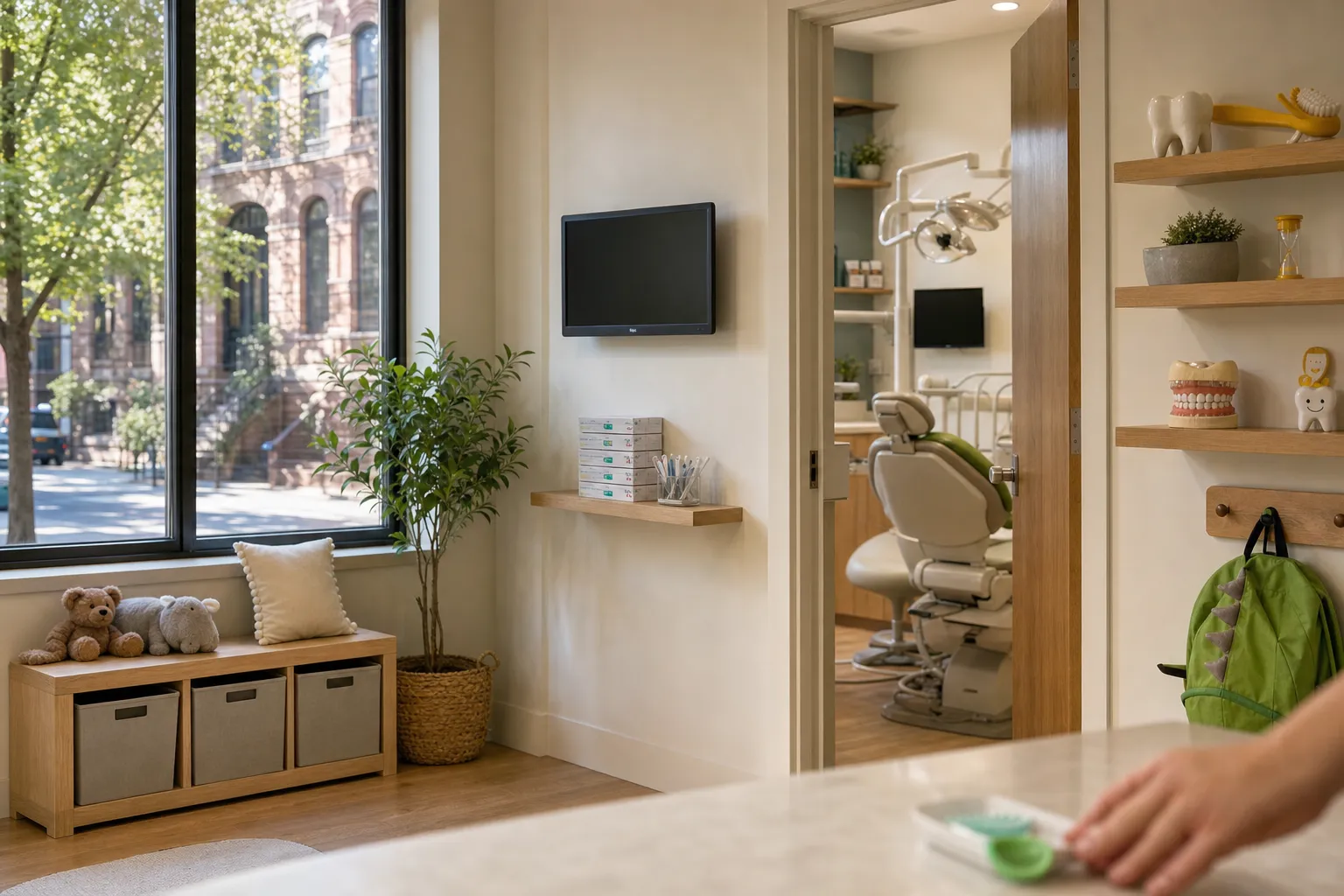
A dental checkup is a routine appointment inside pediatric dentistry, focused on prevention, growth checks and early treatment. For a small number of children who are very anxious, medically complex, or need longer procedures, sedation for kids is a tool we use to help the checkup go safely and calmly.
How dental checkups and pediatric dentistry overlap
Pediatric dentistry is the branch of dental care that treats infants, children and adolescents. A dental checkup is one of the core services we provide within pediatric dentistry, along with cleanings, sealants, fluoride treatments and imaging.
At Dr. Jerry Ashrafi, DMD, MA, PLLC Pediatric Dentist, our checkup visits focus on three goals: preventing cavities, monitoring how teeth and jaws develop, and teaching caregivers daily habits that protect oral health. We tailor every checkup to the child s age, behavior and medical history.
- Prevention and education begin at the checkup.
- Checkups are where we spot early problems and recommend sealants, fluoride or follow up.
- For anxious children or those needing more involved care, sedation may be part of the care plan.
When we consider sedation for a checkup
Sedation for kids is not routine. We consider it when a standard checkup or cleaning cannot be completed safely or when a child s fear would cause harm. Common reasons we may recommend sedation include significant dental anxiety, developmental or medical conditions that make cooperation difficult, or the need to perform several procedures in one visit.
Indicators that sedation may help
- Repeated inability to cooperate despite behavior guidance.
- Special needs that make prolonged stillness unsafe.
- Extensive restorative work identified during the checkup that is too long for a single awake visit.
- Strong gag reflexes or severe dental fear that stops essential treatment.
We discuss sedation as one option on a care plan. The goal is to balance the child s safety, comfort and long term oral health.
Types of sedation we use and why
Sedation exists on a spectrum from mild to deeper levels. Which option is appropriate depends on the child s age, medical history and the planned procedure.
- Nitrous oxide. Mild sedation with fast recovery, often used for short appointments or anxious children.
- Oral sedation. A medication given by mouth to reduce anxiety for moderate procedures. Recovery is longer and the child must be monitored.
- Deep sedation or general anesthesia. Used for complex or lengthy procedures, usually provided in a setting equipped for airway management and continuous monitoring.
We explain the choice, the expected effects and the monitoring plan before any sedated visit.
How we decide, step by step
- Review medical and dental history. We assess medical conditions, medications and past reactions to sedation.
- Behavior and needs assessment. We evaluate whether behavior guidance and brief techniques would allow a safe awake visit.
- Discuss options with caregivers. We explain benefits, risks and alternatives, and answer questions about recovery and follow up.
- Create a monitoring and safety plan. For any sedation level, we plan monitoring, staffing and emergency readiness.
What a sedated checkup looks like
When sedation is part of a checkup, the appointment still follows the same clinical priorities: exam, cleaning when appropriate, imaging if needed, and a plan for follow up care. Sedation is simply a tool we add to allow safe, effective care for a child who cannot tolerate an awake visit.
Typical elements include pre visit instructions, a check of the child s current health on arrival, continuous monitoring during the visit, and a supervised recovery period afterwards.
Pro tip: Bring a comfort item your child uses at home. Familiar objects can reduce stress during preparation and recovery.
Safety, training and what to ask
Parents should confirm qualifications and safety measures before a sedated visit. Ask who will administer sedation, what monitoring is used, and where recovery will occur.
We are a licensed and insured pediatric dental practice serving New York families. Our team follows accepted clinical protocols and uses monitoring equipment appropriate for the level of sedation.
Questions we encourage parents to ask include what to expect during recovery, what to watch for at home, and when to seek emergency care.
Watch out: If a provider minimizes discussion about risks or skips a medical review, get a second opinion. Sedation requires careful planning and clear information for caregivers.
Preparing your child and what you need to do
Preparation reduces risk and helps the child cope. We provide specific pre visit instructions, but common steps include fasting guidelines for certain sedation types, organizing a calm arrival, and planning supervised recovery time at home.
Pre visit checklist
- Share full medical history and current medications with us.
- Follow fasting instructions exactly when oral or deeper sedation is planned.
- Plan transportation and an adult to stay with the child after the visit.
- Bring any previous records or notes about reactions to medications.
Follow up after a sedated visit
After a sedated checkup we confirm the clinical findings, schedule any needed treatment, and review home care. For children who needed sedation once because of strong fear, we often pair sedation with a long term plan to build comfort so future visits can be done awake when possible.
We document the visit and review prevention strategies like sealants, fluoride treatments and regular cleanings to reduce the need for future sedation.
Key takeaway
Sedation for kids is a safe, planned option we use when a pediatric dental checkup cannot be completed without it. Our priority is to protect the child s health while promoting prevention and positive dental experiences.
Frequently asked questions
How do I know if my child needs sedation for a dental checkup?
We decide based on medical history, behavior during previous visits, and the length or complexity of the planned work. Many children who are anxious respond to behavior guidance and nitrous oxide, while others with special needs or extensive treatment may need deeper sedation.
Is sedation safe for young children?
Sedation is safe when provided by qualified professionals, with appropriate monitoring and a medical review beforehand. We follow clinical protocols and discuss risks and benefits with caregivers before proceeding.
Will sedation affect my child s future dental visits?
Sometimes. We use sedation to allow necessary care now and to create a foundation for future cooperation. After a sedated visit we provide strategies to help the child build comfort so later checkups can often be done awake.
What should I bring to the appointment?
Bring your child s medical history, a comfort item if helpful, and plan for supervised recovery time. Follow any fasting or medication instructions we give if oral or deeper sedation is planned.
Do you provide sedation for children with special needs?
Yes. We plan sedation carefully for children with developmental or medical conditions, coordinating with caregivers and medical providers as needed. Our team has experience tailoring care to each child s needs.
Learn more and find us on Google
Read patient reviews and get directions on our Google Business Profile, and learn more about sedation and pediatric dentistry on our site.