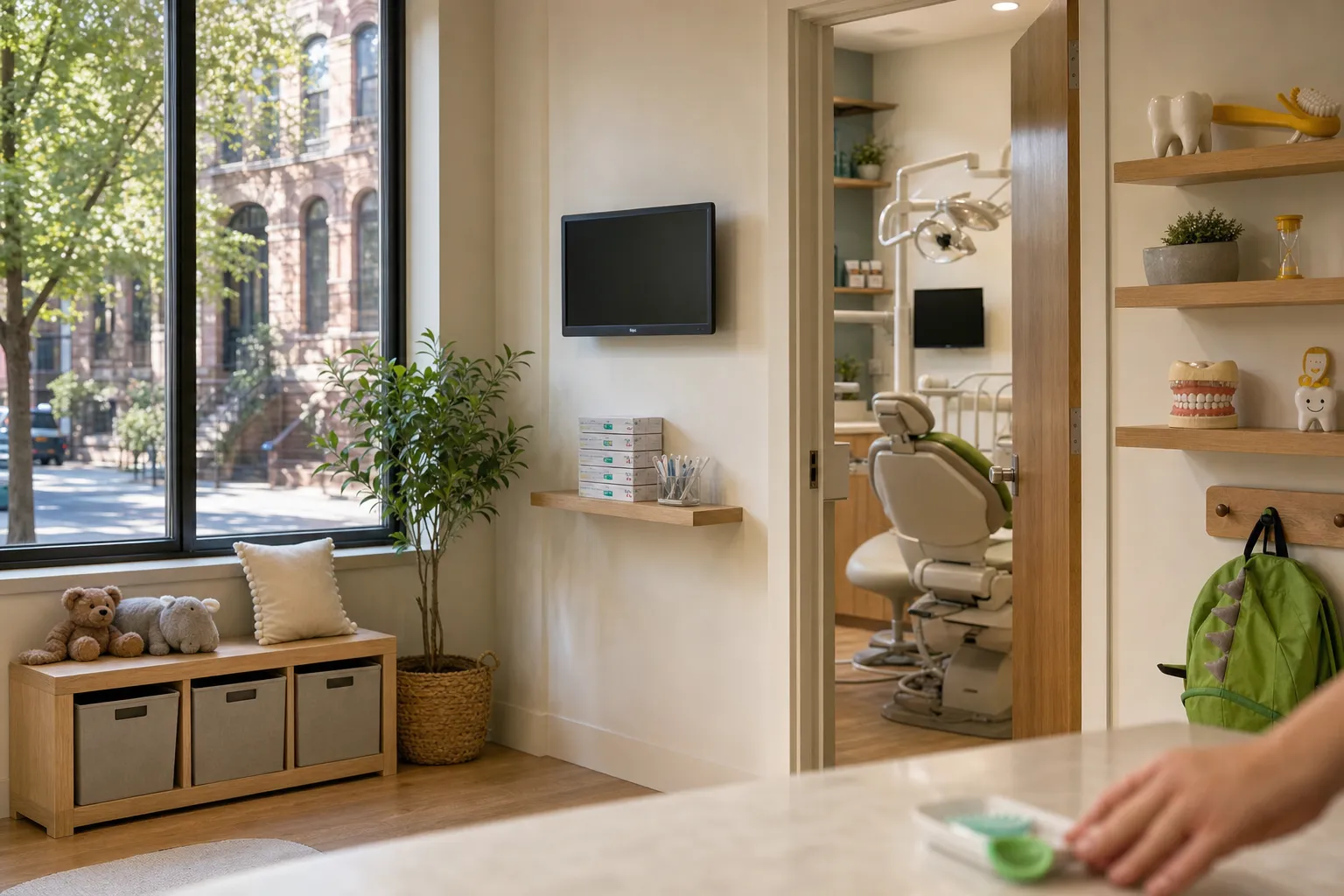
Sedation for kids is a set of methods that help children stay calm, comfortable and still so we can deliver safe dental care. At Dr. Jerry Ashrafi, DMD, MA, PLLC, Pediatric Dentist, we explain the options, weigh risks and benefits for each child, and rely on minimally invasive approaches whenever possible.
How we think about sedation for children
Our guiding principle is to prevent dental problems through education, gentle care and early habits, and to reserve sedation for situations where it truly helps a child get necessary treatment. We combine clinical expertise with clear communication so caregivers understand why sedation might be recommended, what to expect, and how we keep children safe during and after a visit.
We recommend starting with the least invasive option that will achieve a calm, cooperative visit. When a child has high anxiety, special needs, or needs more extensive work that cannot be completed safely while awake, sedation can be the appropriate choice. For background on preparing a child who is anxious about the dentist, see our topic on Child Dental Anxiety.
Common types of sedation used in pediatric dental care
There are several levels of sedation commonly discussed in pediatric dentistry. We describe them here so you know the difference, but not every option is used in every practice. Your pediatric dentist will explain which options are available and appropriate for your child.
- Nitrous oxide. Also called laughing gas, nitrous oxide is inhaled and produces calming effects that wear off quickly after the gas is stopped.
- Oral sedation. A medication given by mouth to reduce anxiety and produce drowsiness. It may leave a child sleepy for several hours.
- Intravenous sedation and general anesthesia. These are deeper levels of sedation provided by appropriately trained providers, often used for more extensive procedures or for children who cannot be managed safely with lighter methods.
For professional guidance on monitoring and safety standards for pediatric sedation, national pediatric dental guidelines offer detailed recommendations. See the American Academy of Pediatric Dentistry sedation policy for clinicians and families.
When sedation may be appropriate
Sedation is typically considered when one or more of these apply:
- The child is very anxious or has had traumatic experiences that prevent cooperation.
- The child has special health care needs or developmental differences that make standard care unsafe or impossible without sedation.
- The procedure is complex or long, and movement would compromise safety or the outcome.
We balance the immediate benefit of completing treatment with the risks of sedation, and we prioritize approaches that preserve healthy tooth structure and avoid unnecessary procedures. When treatment can be broken into shorter visits, or when behavioral techniques and preventive care will achieve the goal, we prefer those routes first.
How we decide the right approach for your child
Decision making starts with a careful exam and a conversation with the caregiver. We review medical history, current medications, previous anesthesia experiences, and any behavioral concerns. Age, weight, anxiety level and the planned procedures all factor into the plan.
- Discuss the goals. We explain the recommended treatment and why sedation might be considered.
- Review medical history. Certain medical conditions or medications change which sedations are safe.
- Choose the least intensive method that will allow safe, effective care. If a deeper level of sedation is needed, we outline who will provide it and how the visit will be organized.
Pro tip: Bring a list of your child s medications and any past reactions to anesthesia to the appointment. That information makes planning safer and faster.
What safety and monitoring to expect
Safety is the primary concern whenever sedation is used. Typical safeguards include previsit screening, age and weight appropriate dosing, continuous monitoring of breathing, heart rate and oxygen levels, and staff trained in pediatric airway management and resuscitation. Larger or deeper sedation may involve additional monitoring and an anesthesiologist or sedation-certified clinician.
Watch out: Any provider who offers sedation should discuss risks, alternatives and recovery expectations in clear terms before any medication is given. Never proceed without understanding who will monitor your child and where recovery will occur.
Preparing for a sedated visit
Preparation reduces risk and helps recovery go smoothly. We cover preparation during the scheduling and previsit call so caregivers know what to expect. Because specific previsit instructions vary by type of sedation and the provider, follow the guidance given for your child s planned procedure.
What caregivers should bring
- Medical and medication list.
- Comfort items the child uses at home, like a blanket or stuffed toy.
- Transportation plan for after the visit, since a child given oral or deeper sedation will not be able to drive home.
For more on routine preventive visits that can reduce the need for future sedation, see our pages on Dental Cleaning and Pediatric Dentistry.
Questions parents commonly ask
Below we answer the most common questions we hear about sedation so you can feel more confident when discussing options with our team.
- Is sedation safe for young children? When chosen and monitored appropriately, sedation can be safe. National pediatric dentistry guidelines outline standards for screening, dosing and monitoring that reduce risk. Discuss your child s medical history with your dentist so they can apply those standards to your child.
- Will my child remember the visit? Lighter options like nitrous oxide often leave clear memory. Deeper sedations commonly produce partial or complete amnesia for the procedure, which some caregivers find helpful for reducing trauma.
- Can we avoid sedation? In many cases yes. Preventive care, behavior guidance, and dividing procedures into shorter visits can avoid sedation. We always prefer those alternatives when they are practical and safe.
How we work with families in Hudson Yards and greater New York
Serving families in New York, New York, we focus on building trusting relationships from the first visit. We explain the reasons behind recommendations and make sure caregivers understand follow up and home care steps that reduce future treatment needs. If a referral or higher level of sedation is the safest option, we will explain that plan and coordinate with the appropriate providers.
Key takeaway
Sedation for kids is a helpful tool when used for the right reason. We emphasize prevention, the least invasive option that will achieve safe care, and clear communication so families can make informed choices.
Frequently asked questions
What is the difference between nitrous oxide and oral sedation?
Nitrous oxide is inhaled and produces mild to moderate calming effects that wear off quickly after the gas is stopped. Oral sedation uses medication taken by mouth and can cause drowsiness that lasts for several hours. The choice depends on the child s needs, the procedure, and safety considerations.
Are there special risks for children with medical conditions?
Yes. Children with certain medical or developmental conditions may need additional evaluation before sedation. We review medical history carefully and recommend the safest setting and provider for each child s situation.
How soon can my child eat or drink after sedation?
Recovery guidance varies by the type and depth of sedation. The provider who administers sedation will give specific instructions. Follow those instructions closely to reduce the risk of nausea, vomiting or breathing problems after the visit.
Where to learn more
To see our patient resources and related topics, check our pages about Sedation For Kids, our Pediatric Dentistry services, and our practice location on the site Home. You can also review our Google Business Profile to read patient reviews and get directions.