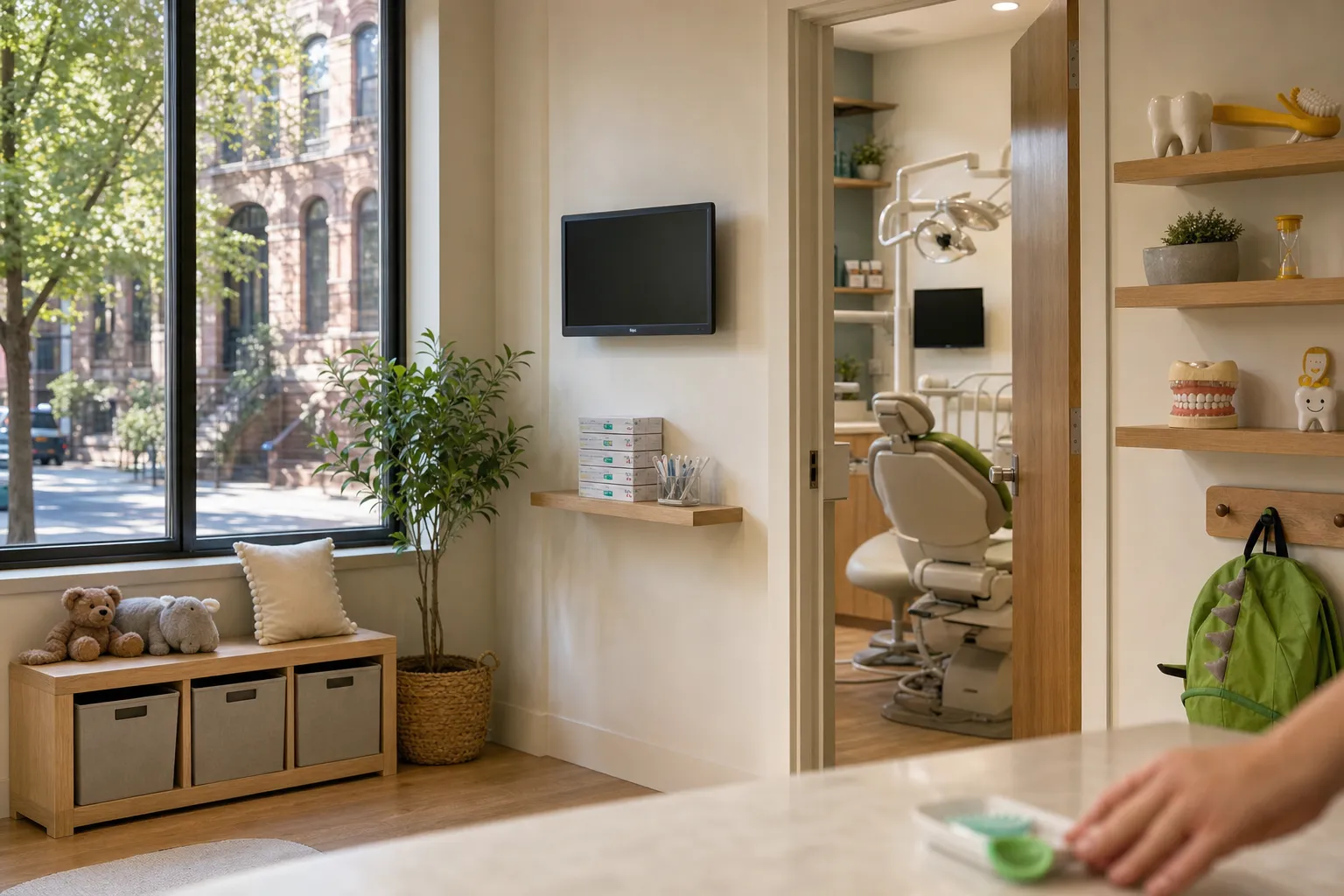
We handle a special needs dental checkup by reviewing medical and behavioral needs up front, adapting the exam to reduce stress, and creating a clear plan for prevention and any follow up. In practice that means we gather health and communication information before the visit, use shorter familiarization steps at the appointment, and prioritize minimally invasive prevention and conservative treatment when needed.
How we review medical and behavioral needs before the visit
Before a checkup we collect relevant medical history, medication lists, communication preferences, and information about sensory triggers. That may include notes from a pediatrician, a school or a caregiver who knows what helps the child stay calm.
For families who are already working with us we review prior notes and imaging to avoid repeating procedures. If you are new, bringing recent medical forms or a short summary helps us plan. Learn about our approach to Special Needs Dentistry on the practice topic page for Special Needs Dentistry, which explains common adaptations and supports.
The exam and checkup, step by step
- Previsit planning. We confirm medical details and identify any mobility, seizure, respiratory, or allergy concerns. That helps us decide whether the visit should be longer, split into two shorter visits, or scheduled at a quieter time of day.
- Meet and greet and orientation. We use a calm introduction with the caregiver present, let the child approach at their own pace, and show nonthreatening tools from a distance. Visual schedules or social stories can help set expectations.
- Short focused exam. When the child is comfortable we do a gentle oral exam, check growth and bite, and look for signs of decay or inflammation. If cleaning is appropriate we keep sessions brief and intermittent to avoid overwhelming the child.
- Imaging and preventive steps. If dental imaging is needed to make safe treatment decisions we use child friendly techniques and the minimum exposure required. Preventive care such as fluoride treatment or sealants may be recommended; we tailor these to the child s tolerance and needs. See our Dental Imaging page for how we choose and use images.
- Shared plan and next steps. We explain findings in plain language, show any images to caregivers, and outline at-home care, timing for the next checkup, and when to come back sooner. If treatment is needed we discuss options and the supports available to make care manageable.
Preparing for your child s visit
What to bring and how to prepare
- A short list of current medications and medical diagnoses, or recent clinic notes.
- Any communication aids, comfort item, or preferred sensory gear that helps the child feel safe.
- A photo or brief notes about past dental experiences that went well or caused trouble.
- Information about school or therapy reports that mention oral habits or cooperation strategies.
If you would like to see our practice location details, directions and hours before the visit, check our Herald Square office information on our home page. We find families feel more confident when they know the route and the waiting area in advance.
Common adaptations we use for comfort and cooperation
- Shorter appointments and scheduled breaks.
- Visual schedules or step by step pictures so the child knows what to expect.
- Sensory friendly room adjustments like dimmer lighting and reduced noise.
- Distraction with books, toys, or a caregiver s preferred calming item.
- Clear, simple language and one instruction at a time to help with understanding.
Watch out: If a child has a respiratory condition, seizure disorder, or complex medical needs, some procedures require medical clearance or special scheduling. Do not attempt to perform dental treatments at home. When we identify increased risk during the review we outline the safest next steps and coordinate care with your child s medical team.
Pro tip: Bring a short written script that tells our team the exact words or gestures that calm your child, and a list of anything that increases anxiety. Small details make a big difference in how smoothly a checkup goes.
After the checkup, follow up and next steps
After the appointment we give caregivers a clear plan that covers home care, diet notes that affect teeth, when to schedule the next checkup, and which preventive services we recommend. For many children that means continuing routine home brushing, a fluoride plan that fits age and risk, and periodic sealant checks when appropriate.
When treatment is recommended, we explain what each option involves and the supports we can provide to make the visit manageable. If behavioral supports or sedation are being considered we review indications and safety factors so caregivers can make an informed decision. Read more about our Dental Checkup service and typical follow up steps on the Dental Checkup service page.
Key takeaway
We tailor each special needs dental checkup to the child s medical and communication needs, keep appointments short and predictable, and focus on prevention and conservative treatment so families leave with a clear, realistic plan.
Frequently asked questions
How often should a child with special needs come for a dental checkup?
Frequency depends on oral health risk and medical conditions. Many children need a checkup every six months, but some require more frequent visits. We base the schedule on the exam, decay risk, and any medical or behavioral concerns.
Are dental x rays safe for children with special needs?
When imaging is necessary we use the smallest number of images and modern digital sensors to limit exposure. We weigh the diagnostic value of each image against the child s comfort and safety. If imaging is difficult, we consider alternative monitoring strategies and discuss the trade offs with caregivers.
What if my child cannot tolerate a standard cleaning?
We can split cleaning into shorter sessions, focus on what is comfortable, and teach caregivers targeted home care techniques. If needed, we discuss behavior guidance options and, only when appropriate, sedation options in coordination with medical consults.
Will you coordinate with my child s pediatrician or therapists?
Yes. We rely on caregiver consent to communicate with pediatricians, speech therapists, or occupational therapists when coordination will improve safety or outcomes. Sharing information ahead of the visit usually produces a smoother, more effective checkup.
Learn more and check our profile
For local details and real family feedback, check our Google Business Profile to read reviews and get directions. To learn more about our services and related topics visit our Dental Checkup service page, our Special Needs Dentistry topic page, or the practice home page for Herald Square.