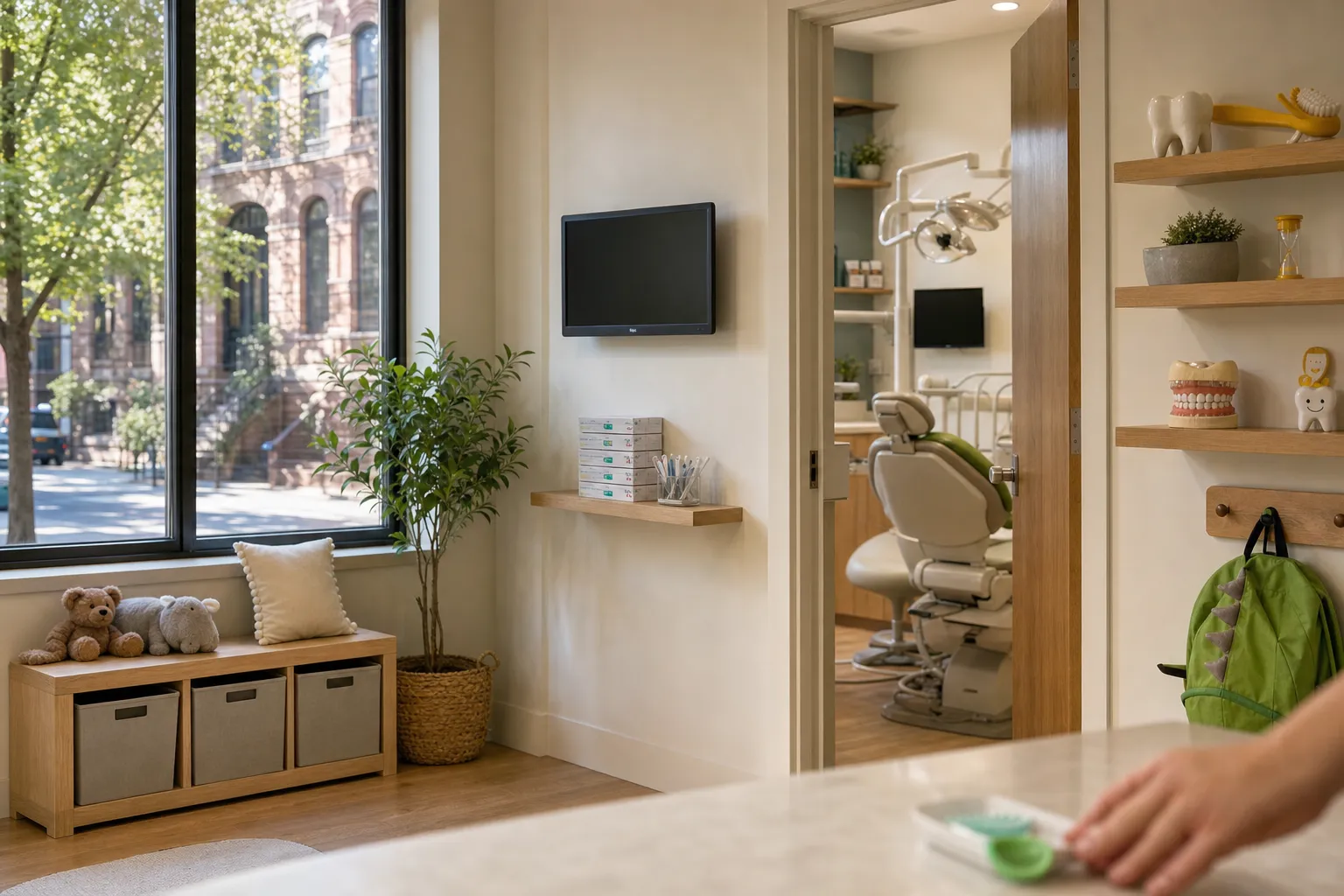
A strong pediatric dentistry plan for a child with special needs centers on four things: individualized behavior supports, a prevention first approach, coordination with caregivers and other providers, and treatment that is minimally invasive and predictable. We build plans that meet each child where they are, reduce fear, and focus on long term oral health.
What is special needs dentistry for children
Special needs dentistry adapts pediatric dental care to children who have physical, developmental, behavioral, sensory, or medical conditions that affect how they receive care. That includes children with autism spectrum differences, Down syndrome, cerebral palsy, complex medical histories, or behavioral challenges. The goal is the same as with any child. We prevent disease, preserve healthy tooth structure, and make visits as comfortable and effective as possible.
Why this matters in Garment District, New York
Families in Garment District and nearby neighborhoods face specific practical realities. Commutes, school schedules, and coordination with pediatricians, therapists, and schools all affect appointment timing and follow up. We design plans that fit urban family life while meeting each child s clinical needs.
We also factor in local supports. We work with pediatricians and daycare centers across New York to align care plans, and we tailor appointment length and timing to reduce missed visits and stress for caregivers.
Key concepts that make a plan strong
- Individualized behavior guidance. Use of visual schedules, social stories, graduated exposure, and caregiver coaching so each child can cooperate as much as possible.
- Prevention first. Regular cleanings, fluoride treatments, and sealants to limit the need for invasive procedures.
- Minimally invasive treatment. We favor approaches that conserve tooth structure, like atraumatic restorations and focused preventive work when possible.
- Multidisciplinary coordination. Communication with pediatricians, speech therapists, occupational therapists, and schools to align goals and reduce duplicate visits.
- Flexible scheduling and environment. Longer appointment slots, quiet rooms, sensory accommodations, and consistent staff to build trust.
- Thoughtful imaging. Tailored dental X ray plans and the use of child friendly imaging techniques to get the information we need with minimal stress.
How we build a strong plan, step by step
- Intake and medical review. We begin by collecting a thorough medical and developmental history from caregivers. That includes medications, allergies, mobility or communication needs, and any sensory triggers.
- Caregiver interview and goals. We ask caregivers about past dental experiences, what calms the child, and practical constraints like school or therapy schedules.
- Sensory and behavior assessment. During the first dedicated visit we observe tolerance for lights, sounds, touch, and taste. This helps us select behavior tools like desensitization, social stories, or scheduling approaches.
- Preventive schedule. We set a prevention plan that may include dental cleanings, fluoride treatments, and sealants. We explain how home routines and nutrition choices reduce risk of cavities.
- Imaging plan. If images are needed, we use child centered techniques and take only the images required to make safe, effective decisions. We explain options and limits clearly to caregivers.
- Minimally invasive treatment plan. If restorative work is needed, we prioritize approaches that preserve enamel and dentin. We also plan for predictable behavior supports and, when appropriate, safe sedation pathways with clear coordination.
- Follow up and caregiver coaching. We document steps for home care, school coordination, and what to expect at the next visit.
What families should bring and prepare
- A summary of the child s medical history, medications, and any recent hospitalizations.
- Notes on what calms or upsets the child, including favorite toys, snacks, songs, or words.
- Reports or letters from therapists, schools, or pediatricians that explain communication or mobility needs.
- Any devices used for communication or comfort, like noise reducing headphones or a fidget item.
Common plan elements you will see in our care
Most effective plans combine several elements. Below are typical components we use and why each matters.
- Extended first visits. Shorter, slow introduction visits or longer single visits set realistic expectations and reduce the chance of a distressing experience.
- Visual supports and social stories. These prepare a child for what will happen and lower anxiety by creating predictability.
- Graded exposure or desensitization. We gradually introduce instruments, lights, and touches over multiple visits when needed.
- Appointment timing strategies. Early morning or low stimulation times help some children. We coordinate with caregivers around school or therapy timing.
- Caregiver coaching. We teach toothbrushing techniques, safe fluoride use, and nutrition steps that reduce cavities.
How imaging and cleanings fit into a special needs plan
Dental imaging and routine cleanings are central to prevention. We adapt both to the child s tolerance. When we need images, we use approaches designed for children and take the minimum number of exposures to answer the clinical question. If a child cannot tolerate a routine cleaning on a particular day, we use short, focused visits to remove the highest risk plaque and schedule follow up rather than force a single long visit.
Learn more about our specific imaging options on our Dental Imaging page and about routine prevention on our Dental Cleaning page.
Choosing between in office desensitization and sedation
| Approach | When appropriate | Pros | Considerations |
|---|---|---|---|
| In office graded desensitization | When the child can build tolerance over multiple short visits | Builds long term cooperation, avoids medication | Requires multiple visits and caregiver commitment |
| Light sedation or conscious sedation | When limited procedures are needed and medical history allows | Makes brief, focused treatment possible | Needs medical screening and monitoring |
| General anesthesia in an operating room | For extensive treatment or when other approaches are not safe | Allows comprehensive care in one appointment | Requires coordination with anesthesia providers and a hospital or surgical center |
Pro tip: Bring a familiar item from home and keep a routine before the appointment. Predictability and something comforting can reduce anxiety for many children.
Watch out: Avoid skipping medical details. Medications, seizure history, and breathing concerns change how we plan imaging, sedation, and appointments.
Working with schools, therapists, and pediatricians
Strong plans do not live only in the dental office. We routinely share care recommendations with pediatricians, occupational and speech therapists, and school nurses when caregivers authorize coordination. That alignment helps with behavior supports at school, safe medication decisions, and consistent home routines.
When a child has an Individualized Education Program or 504 plan, we provide documentation that helps the school plan for dental related absences and in school supports when appropriate.
Common questions families ask
- How often should my child with special needs see the dentist? Frequency depends on risk. We commonly recommend every three to six months for children at higher risk of cavities, and every six months for low risk children. We set a schedule based on your child s needs and response to preventive steps.
- Will I need to bring therapists into the appointment? Not usually. We ask for therapist reports and may coordinate plans. In some cases, a therapist may attend to help with behavior strategies during an appointment, if families request it.
- What if my child cannot tolerate X rays? We take only the images we need and use child friendly techniques. If imaging is not possible safely in the office, we discuss alternatives and coordinate with other providers.
Related services and pages
For families who want to dig deeper, we maintain topic pages and service pages that explain specific steps and options. Read our Special Needs Dentistry topic to learn more about our approach, or visit our Pediatric Dentistry service page for an overview of routine care. For more on imaging and prevention, see our Dental Imaging and Dental Cleaning pages. These pages outline how each service is adapted for children with special needs.
We serve families across Manhattan and nearby neighborhoods, including Garment District. Learn about our Garment District location for local details.
When to seek specialized help now
If your child shows tooth pain, bleeding gums, sudden changes in eating or sleep related to oral discomfort, or signs of infection, we prioritize arranging evaluation. Early attention prevents small problems from becoming urgent and helps keep treatment options simple.
Key takeaway
A strong pediatric dentistry plan for children with special needs is individualized, prevention focused, and coordinated with caregivers and other professionals. We design plans that reduce fear, limit invasive care, and fit the realities of families in Garment District, New York.
Frequently asked questions
What does a first visit for a child with special needs look like?
The first visit focuses on listening. We review medical history, observe sensory tolerance, and introduce the child to the setting slowly. We may do a short, gentle exam and set a plan for preventive care and next steps.
How do you decide if sedation is needed?
Decision making starts with medical history, the complexity of the dental work needed, and the child s ability to cooperate with behavior supports. We explain options and coordinate with medical providers when sedation is considered.
Can you coordinate with my child s pediatrician or therapists?
Yes. With caregiver permission we share recommendations and reports with pediatricians, speech therapists, occupational therapists, and school health staff to make care consistent across settings.
Do you use special equipment for sensory sensitive children?
We adapt the environment, use visual supports, offer quiet appointment options, and use child friendly imaging approaches. We stage the visit to match each child s needs rather than relying on a one size fits all setup.
How do you prevent cavities in children who have trouble brushing?
We combine caregiver coaching, professionally applied fluoride treatments, sealants on molars when appropriate, and a prevention schedule tailored to risk. We also discuss dietary changes that lower cavity risk.
Where can I read more about preparing for the first dental visit?
Start with our First Dental Visit topic page for practical steps and what to bring. That page walks through timing, what to expect, and how we make the first appointment positive.
Learn more and check our local profile
Read patient experiences and get directions by visiting our Google Business Profile. For more details about our approach, see the Special Needs Dentistry topic page, the Pediatric Dentistry service page, and information about our Garment District location.
Special Needs Dentistry | Pediatric Dentistry | Garment District location | Dental Imaging | Dental Cleaning