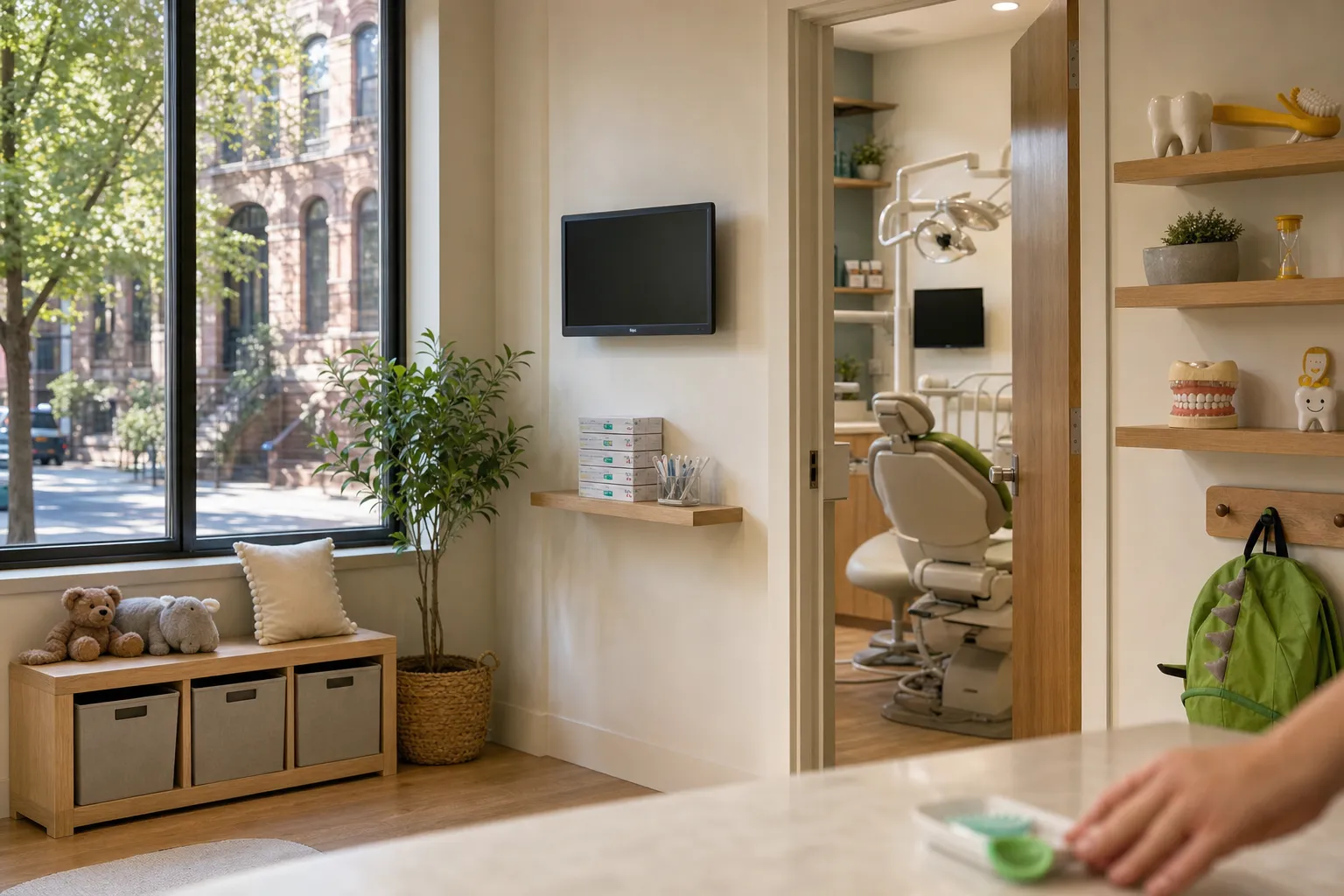
Child dental anxiety most often shows as avoidance, crying, clinging, or complaints of a stomachache or headache when a dental visit approaches. In Garment District, New York, these behaviors look the same as anywhere else, but city factors like busy streets, crowded commutes and unfamiliar clinics can make a child feel more overwhelmed.
How dental anxiety usually looks in children
We see the same basic patterns across infants, toddlers, school age children and teens. Knowing these signs helps you spot anxiety early and get the right kind of support.
- Behavioral avoidance. Refusing to enter the clinic, delaying appointments, or putting off toothbrushing at home.
- Emotional signs. Excessive crying, clinging to a caregiver, sudden tantrums, or withdrawal and quietness.
- Physical complaints. Saying they have a stomachache, headache, or feeling sick to avoid the visit.
- Verbal worry. Expressing fear of drills, needles, or specific noises associated with the dentist.
- Uncooperative in the chair. Squirming, pushing away, or refusing to open their mouth during an exam.
- Regression. Returning to baby behavior such as thumb sucking or needing more physical comfort after a dental visit.
Why kids in Garment District sometimes seem more anxious
City life does not cause dental anxiety, but the environment around a visit can increase stress. We keep this in mind when we see families from Garment District and nearby Manhattan neighborhoods.
Common contributing factors we observe include:
- Busy commutes and crowded sidewalks that make arrival chaotic for little ones.
- Unfamiliar clinical spaces, especially for children who are new to any doctor visit.
- Previous medical or dental experiences that were uncomfortable or painful.
- High activity schedules for parents, which can make preparation for a visit feel rushed.
- Special needs or sensory sensitivities that make sounds, lights and touch feel intense.
We also work with pediatricians, daycare centers and local families to understand a child s past experiences before the first dental visit. If a child has developmental or sensory needs, we coordinate care and tailor visits to reduce stress.
How we assess dental anxiety in our pediatric practice
When a family arrives, we begin with a brief, friendly conversation to learn what the child feels and what the caregiver has noticed. We always meet children where they are and never force an exam.
What we look for in the first few minutes
- Behavioral cues. How the child interacts with the environment and with team members.
- History. Caregiver reports of earlier medical or dental visits, and any triggers at home or school.
- Medical and developmental background. Sensory issues, communication style and previous reactions to care.
Our approach during the visit
We use behavior guidance techniques that respect your child s comfort. These often include tell show do, positive reinforcement, distraction and age appropriate explanations. For imaging, we explain why an image is needed and keep exposure to a minimum when taking dental X rays or digital scans. You can read more about how we handle imaging on our Dental Imaging page.
When more support is needed, we discuss options with you. That may mean breaking treatment into shorter visits, using additional distraction, or coordinating with a pediatrician or specialist. We avoid invasive approaches when possible and favor dentally conservative, minimally invasive care.
Practical steps parents can try before a visit
These suggestions help children feel safer and more predictable before they step into our office. They are meant to make visits easier, not to replace professional support when anxiety is severe.
- Talk about the visit in simple terms. Use brief, positive language. Avoid long stories that focus on worst case scenarios.
- Role play at home. Let your child pretend to be the dentist and the patient. Use a soft brush or toy to look in the mouth and practice opening wide.
- Read a children s book or watch a short video about first dental visits. Familiar stories reduce fear of the unknown.
- Plan arrival time carefully. Give extra time for subway or bus delays so you are not rushed. A calm arrival helps children start visits relaxed.
- Bring a comfort item. A favorite small toy, blanket or quiet book can be reassuring in the waiting area and in the chair.
Pro tip: Tell the truth but keep it brief. If a procedure might cause pressure or mild discomfort, say so in one sentence and immediately follow with how you will be there to help.
When dental anxiety needs more than home preparation
Most children respond to gentle behavior guidance and short, well planned visits. But some kids need additional support. Contact us if your child shows any of these signs:
- Severe refusal that prevents routine checkups or cleanings.
- Traumatic reactions after a previous medical or dental event.
- High dental disease risk where delaying care would worsen tooth health.
- Significant sensory or developmental needs that make standard visits unsafe or ineffective.
Watch out: If dental anxiety keeps a child from getting regular checkups or needed X rays and imaging, tooth decay can advance unnoticed. Early professional help avoids larger treatments later.
When additional measures are required, we evaluate each child individually and may recommend options such as longer acclimation visits, scheduling with our experienced hygienists, or working with specialists. We also use digital dental imaging selectively and only when clinically necessary to guide care and reduce repeat visits. Learn about our approach to imaging and safety on our Dental Imaging page.
What parents can expect from our team in Garment District
We aim to make each visit predictable, safe and kid friendly. Here is what families typically experience with us.
- Clear pre visit communication. We review what will happen during the visit and invite caregivers to share what calms their child.
- Child centered techniques. Gentle language, age appropriate explanations and praise based guidance.
- Minimally invasive care. We prefer conservative treatment and focus on prevention with dental cleanings, fluoride treatments and sealants when appropriate.
- Coordination with your child s providers. We collaborate with pediatricians, daycare centers and local specialists when a child s anxiety links to broader health or developmental needs.
To learn more about our pediatric practice and the full range of services we offer, including pediatric dentistry and routine checkups, visit our Pediatric Dentistry service page. If you are looking for care locations or want to see if our practice is convenient for your family, check our Locations page.
Common misconceptions about dental anxiety in kids
Parents often worry that anxiety will never improve. In our experience, with consistent gentle exposure and the right supports, many children become comfortable with dental care.
Other myths we correct regularly include:
- Myth: Bribing with sweets is the best way to get through a visit. Fact: Short term compliance can be achieved by rewards, but healthy long term habits rely on predictable routines and positive, non food rewards.
- Myth: Avoiding the dentist keeps stress away. Fact: Skipping checkups often increases anxiety and dental problems over time.
- Myth: Loud tools always hurt. Fact: Many visits are exam and cleaning only and do not require high noise procedures. We prepare children for sounds and give them time to adjust.
Related topics and services
We cover child dental anxiety as part of a wider approach to childhood oral health. For more reading on preparation and routine care, see our topics on the first dental visit and infant oral health. For clinical services that help prevent cavities and reduce future anxiety, consider reading about dental cleanings and dental checkups.
Related pages on our site you may find useful:
Frequently asked questions
How early does dental anxiety appear in children?
Dental anxiety can appear as early as the toddler years, often around the time of the first dental visit. Sometimes it develops after a single uncomfortable experience. We recommend the first dental visit by the first birthday or when the first tooth appears to build familiarity and reduce fear.
Will dental X rays make my child more anxious?
Dental X rays are brief and usually less stressful than people expect. We explain the process, use child friendly language, and only take images when they are needed to answer a clinical question. For details on safety and techniques we use, see our Dental Imaging page.
What do you do if a child will not cooperate at all?
We never force an exam. If a child cannot cooperate, we pause and plan a gentler approach. That might include shorter acclimation visits, distraction methods, scheduling when the child is most rested, or involving our hygienists for a gradual introduction. In rare cases we discuss additional supports and referrals with the caregiver.
Can I stay with my child during the visit?
Yes. Caregivers are welcome to be present when that helps a child feel safe. We will also guide you in ways to support your child in the chair without increasing anxiety, such as offering quiet reassurance and following our team s directions during procedures.
Key takeaway
Child dental anxiety shows up as avoidance, strong emotions and physical complaints, and the same signs are common among families from Garment District. With predictable visits, child centered behavior guidance and selective use of imaging and preventive care, most children become comfortable with dental care. We work with families and local providers to make visits manageable for every child.
Learn more and read our reviews
See what other parents in New York say about their experiences on our Google Business Profile and get directions from Garment District. For more on preparation and routine care, visit our First Dental Visit and Infant Oral Health topic pages, and view our Pediatric Dentistry services.