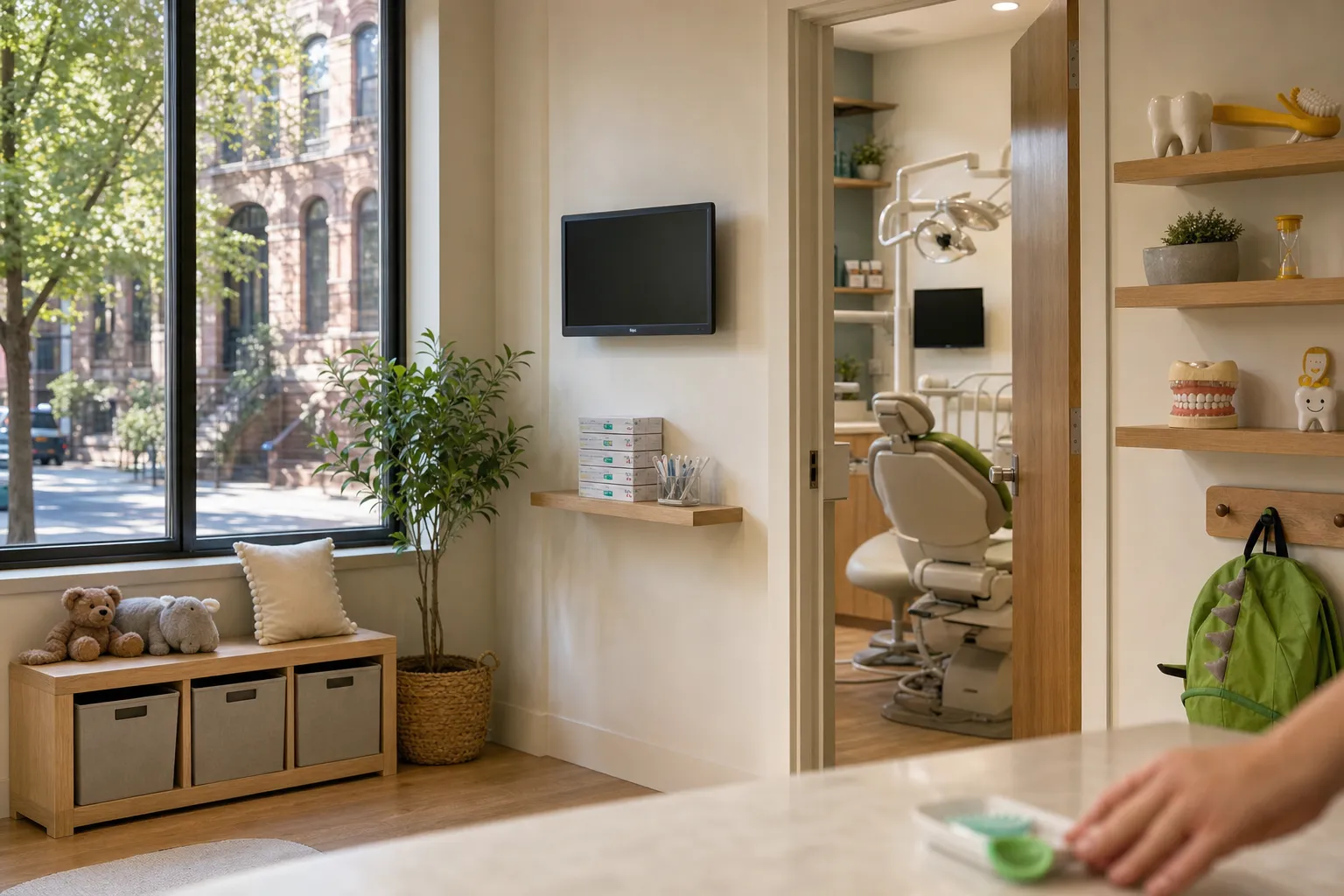
We recommend a few simple steps to prepare your infant for a dental cleaning so the visit goes smoothly and supports long term oral health. Bring your child rested and fed but not full, bring the child s health record and any bottles or comfort items, and plan to arrive early so we can answer questions and let your child settle in. Those steps reduce stress and let us focus on prevention, gentle cleaning and parent education.
What is infant oral health and a dental cleaning for babies
Infant oral health describes the early care and habits that protect a baby s teeth and gums while the first teeth are coming in. A dental cleaning for infants is usually brief, focused on removing plaque, checking for early decay, and coaching caregivers on brushing, feeding and fluoride. We tailor each visit to your child s age, comfort level and risk for cavities.
At Dr. Jerry Ashrafi DMD MA PLLC Pediatric Dentist we focus on prevention and patient education. A cleaning visit is an opportunity to teach parents how to clean baby teeth, review feeding practices that affect teeth, and decide whether fluoride varnish or sealants will help protect enamel.
Why preparing matters in Columbus Circle New York
Local families in Columbus Circle, where daycare schedules, subway commutes and neighborhood routines are part of daily life, benefit when dental visits are predictable and low stress. A prepared visit reduces time in the chair, lowers anxiety for both child and caregiver, and leads to better home care afterwards. Good early experiences help children accept routine visits as they age.
Official guidance from the American Academy of Pediatric Dentistry recommends beginning dental care by the first birthday to prevent early childhood cavities and to establish a dental home. For more on the timing of the first visit see the American Academy of Pediatric Dentistry guidance.
Quick answer for busy parents
Bring a fed but not overly full infant, their health record and any comfort item. Arrive early so your child can adjust. Be ready to show us feeding habits and current toothbrushing routine. We will perform a gentle cleaning, check for signs of decay, and give clear home care steps you can follow after the visit.
That short summary covers the essentials. Below we expand on what to bring, how to time feedings, what to expect during the visit and how to make follow up care easier at home.
Key concepts parents should know
- Timing of the first visit. The first dental visit is recommended by the time a child s first tooth appears or by the first birthday, whichever comes first. Early visits let us spot problems when they are easiest to treat.
- What a cleaning does for infants. For babies the cleaning focuses on plaque removal, gum health, and caregiver instruction. We do not polish like an adult cleaning unless appropriate for the child s age.
- Fluoride varnish and prevention. Fluoride varnish is a safe, quick coating we often apply to strengthen enamel and reduce decay risk.
- Feeding and decay risk. Frequent sugary drinks, night time bottles, and prolonged use of sippy cups raise the chance of cavities. We discuss safer feeding patterns.
- Behavior and comfort. We use gentle techniques, distraction, and positive coaching to keep visits calm. Your presence and familiar items help.
- When to reschedule. If your infant has a fever, cough or is unusually fussy, rescheduling helps protect your child and other patients.
How to prepare step by step before the appointment
- Check your child s records. Bring any pediatrician notes or records about allergies, recent illnesses, or medications. If this is your child s first dental visit, bring immunization or health information that helps us assess risk.
- Time feedings carefully. Offer a calm feeding before the visit so your baby is not hungry, but avoid a very large feed in the moments before the appointment. A slightly settled infant is easier to examine.
- Bring comfort items. A favorite blanket, toy, or small stuffed animal helps a child feel secure on the exam chair.
- Practice home brushing. If you have started cleaning the gums or teeth, keep that routine. Tell us what toothbrush, toothpaste and technique you use so we can advise improvements.
- Plan to arrive early. Give yourself time for parking or transit and to complete any intake forms. A calm start makes the visit easier.
- Prepare questions. Write down feeding times, how you soothe at night, and any concerns about teeth or mouth pain. We will answer these and make tailored recommendations.
What to expect during the infant dental cleaning
We keep infant cleanings short and focused. A typical visit includes a quick oral exam, gentle plaque removal with a soft brush or cloth, assessment of eruption patterns, and discussion of home care. If the child tolerates it we may apply fluoride varnish. If dental imaging is warranted we will explain why and use low exposure digital techniques.
Our team explains each step to you, and we pause if the child needs a break. We use behavior guidance methods designed for young children and aim to make the experience as positive as possible.
Checklist: what to bring to the appointment
Bring these items
- Health record or notes from your pediatrician.
- A comfort item your child uses at home.
- Any bottles, sippy cups or formulas you use so we can advise on feeding techniques.
- List of current medications or allergies.
- A summary of your toothbrushing routine and any past dental care.
Pro tip: If toothbrushing is new, practice brushing for 30 seconds before bed for a few nights so your infant gets used to the routine before the visit. That makes demonstrations at the office easier to follow.
Common concerns and how we handle them
Below are frequent questions parents ask and how we address them.
- Will the cleaning hurt my baby? Most infant cleanings are gentle. We use soft instruments and stop if the child is upset. We explain options for calming and do not proceed if the child is in distress.
- Is fluoride safe for babies? Fluoride varnish is safe when applied by a trained pediatric dentist and recommended for children at risk of cavities. We follow dose guidance and will explain benefits and precautions.
- Do infants need X rays? X rays are not routine for very young infants. We recommend imaging only when necessary to evaluate a suspected problem. When needed we use digital imaging to minimize exposure. See our information on Dental Imaging for more details.
- When should I be worried about a white spot or brown stain? Early changes in enamel can be a sign of decay. If you notice spots, call your pediatric dentist for an evaluation. Early detection lets us treat conservatively.
Related services we provide
We offer a range of services that work together with cleanings to protect infant teeth.
- Dental Cleaning for routine plaque control and caregiver instruction.
- Dental Checkup to assess development, eruption and overall oral health.
- Dental Imaging when we need a closer look at tooth structure or to rule out hidden problems.
- Fluoride Treatment such as varnish to strengthen enamel.
- Dental Sealants when appropriate, for older toddlers at cavity risk.
How feeding, sleep and bottles affect infant teeth
Frequent night time bottles with milk or juice, prolonged pacifier use dipped in sweet substances, and constant sipping from a bottle or sippy cup raise decay risk. We help caregivers balance nutrition and oral health by recommending limits on sugary drinks, strategies for weaning from bottles, and a bedtime brushing routine.
If your child uses medications that contain sugar, tell us so we can factor that into prevention planning. We tailor advice to the realities of busy families in New York and suggest small changes that reduce risk without disrupting routines.
When to reschedule or call sooner
Postpone or call us if your infant has a fever, persistent vomiting, or is unusually lethargic. Also make an earlier appointment if you notice rapid tooth color changes, swelling, bleeding that does not stop, or apparent pain during feeding. Those signs may indicate infection or injury and need prompt attention.
Related locations and neighborhood considerations
Families in Columbus Circle and nearby neighborhoods can expect a mix of public transit and walking when they come for a visit. If you are visiting from upper Manhattan, Midtown, Hell s Kitchen or the Theater District, plan time for elevators and possible crowds. We aim to make parking and transit details part of your arrival instructions when you schedule through our contact page.
For more about infant oral health basics and local topics see our Infant Oral Health topic page. To learn about the timing of a first dental visit see our First Dental Visit topic page.
For information about where we serve families and how to find our office, review the Locations hub.
Helpful resources and evidence
Authoritative guidance helps shape our recommendations. The American Academy of Pediatric Dentistry recommends a child see a dentist by the first birthday. The Centers for Disease Control and Prevention tracks early childhood caries and prevention strategies. We rely on these sources when we explain the why behind routine cleanings and fluoride varnish.
Selected external resources
Key takeaway
Preparing for an infant dental cleaning in Columbus Circle New York is mostly about timing, comfort and clear information. Bring health records and comfort items, time feedings so the child is settled, and be ready to describe feeding and brushing routines. That allows us to provide a gentle cleaning, practical prevention steps, and guidance that protects teeth as they come in.
Frequently asked questions
When should my baby have their first dental cleaning?
We follow the American Academy of Pediatric Dentistry recommendation that a child see a dentist by the first birthday or when the first tooth appears. The initial cleaning may be brief and focused on caregiver instruction and prevention.
Do infants need fluoride?
Fluoride varnish is commonly recommended for infants at risk of decay. We apply varnish carefully and explain the benefits and minimal risks. Toothpaste with fluoride can be introduced in small amounts as we advise during the visit.
How long does an infant cleaning take?
Most infant cleanings are short, often 15 to 30 minutes including consultation with the caregiver. The actual cleaning is usually only a few minutes. We adjust the pace to the child s tolerance and comfort.
Should I give my baby a bottle before the appointment?
Offer a calming feed before you leave so your child is not hungry, but avoid a very large feed immediately before the exam. A settled child is easier to examine and clean.
What if my child is anxious or cries?
Crying is common and normal. We use gentle techniques, let caregivers soothe the child, and stop the procedure if needed. Our approach aims to build trust for future visits.
Learn more and find our location details
Check our Google Business Profile to read reviews and get directions, and learn more about infant care on our Infant Oral Health topic page. You can also review our Dental Cleaning service page and our Locations hub for details about where we serve families in New York.